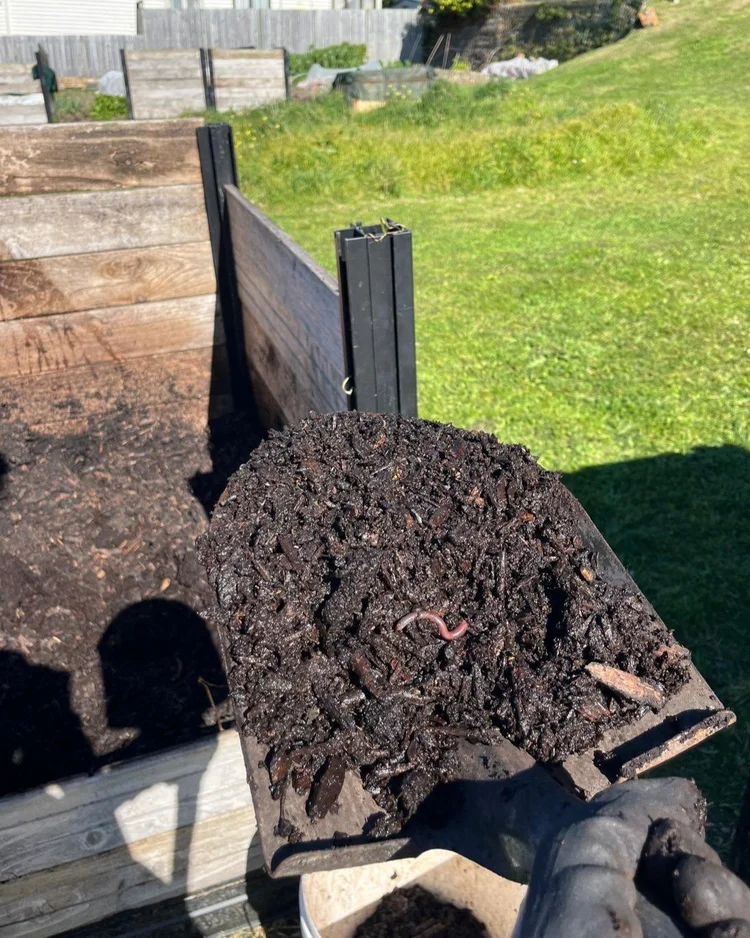
Making the best compost on the blockLike parents to a newborn baby, we’ve built up quite the knack over the last 10 years for knowing what a pile of compost needs. We can tell how healthy it is using the naked eye and the bare hand - if it’s too hot/cold, too dry/wet, and when it needs burping. BUT… we want to know more. How can Kaicycle make THE BEST compost possible, to regenerate Te Whanganui-a-Tara’s soils and grow nutritious organic kai? To get a detailed picture of the chemical components in our compost, we started with some classic testing of pH levels, carbon to nitrogen ratios, and levels of macro-nutrients (like nitrogen and phosphorus) and micro-nutrients (like iron and zinc). So far so good. Counter to what fertiliser companies might say, however, soil chemistry is not everything. It turns out that soil biology is the primary driver in determining plant growth - specifically, the ratio of bacteria to fungi. There is a whole interconnected ecosystem of organisms living in our soils - worms, invertebrates, bacteria, fungi, protozoa, nematodes and -of course- the roots of plants and our testy veggies! So, we’re working with Cory Hope - a Soil Food Web expert and manager at Paecycle in Paekākāriki - who has kindly offered his expertise as a koha. He has looked at the balance of living organisms in our compost under a microscope, and recommended that we increase the levels of fungi, protozoa and nematodes. Inspired by what we found, we’ve started making detailed notes of every step in the composting process and fine tuning our recipes and methods. Stay tuned on how this journey develops - we’ll share our findings down the line so that others can benefit from this mahi!
|