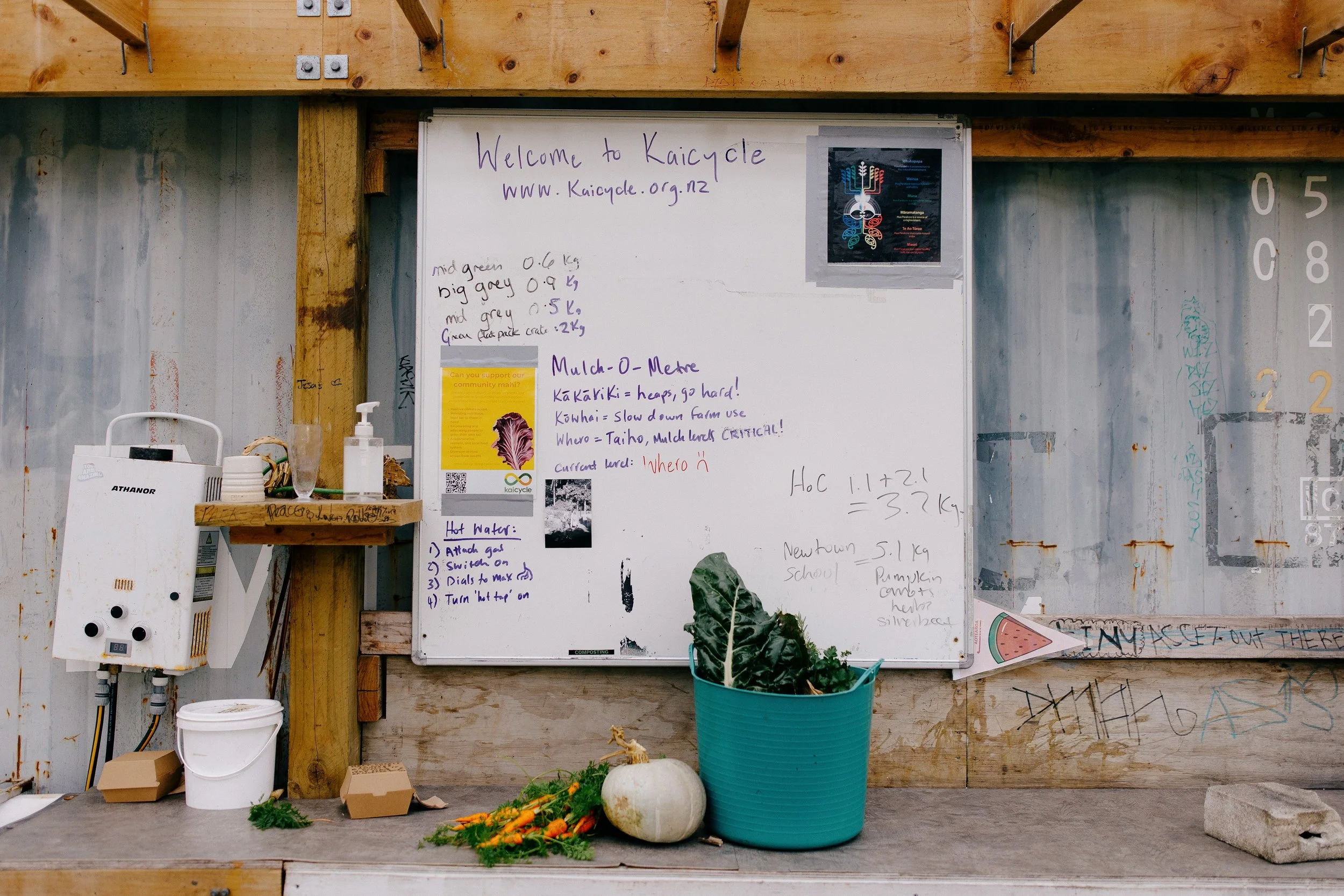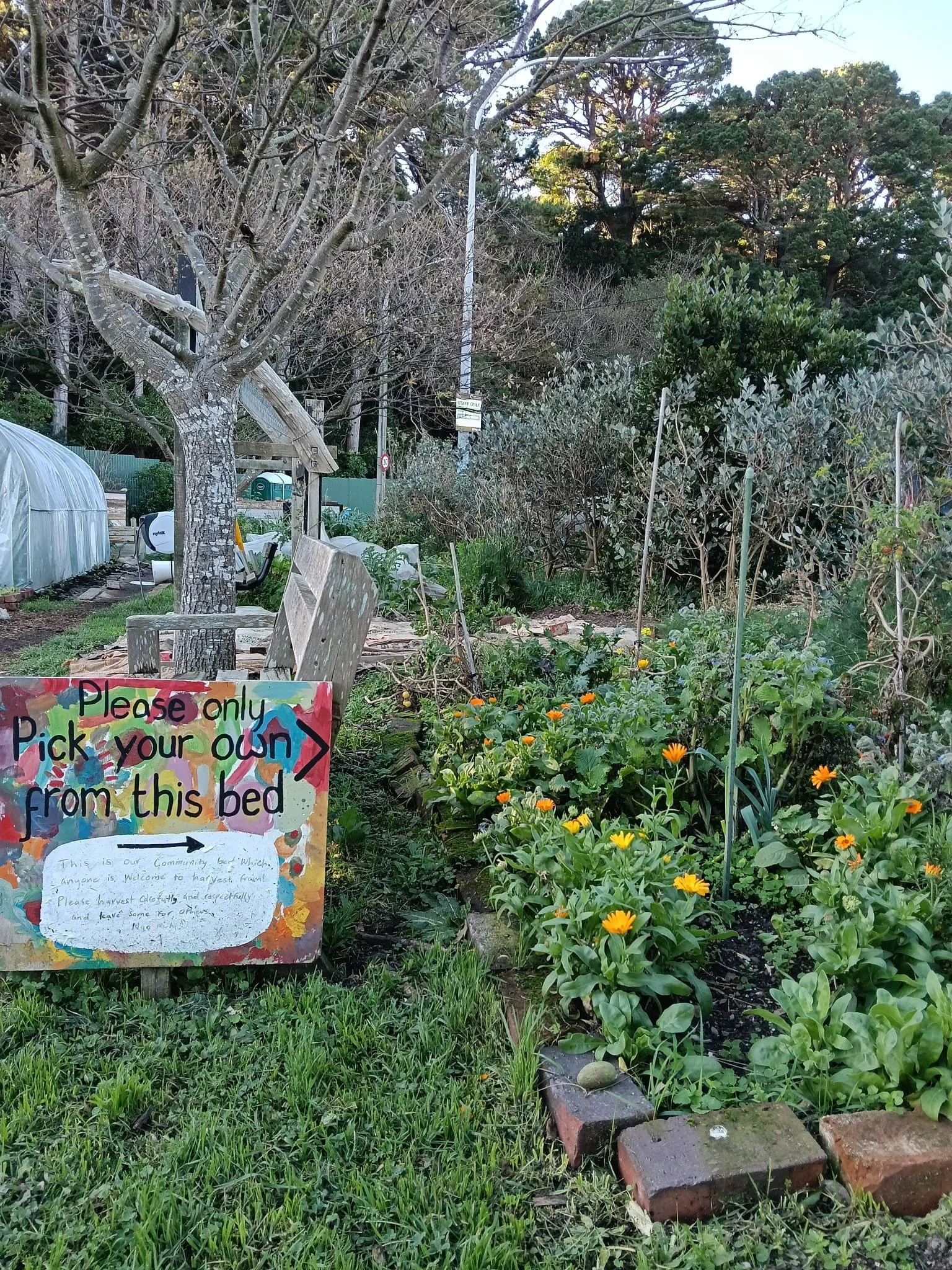
We recently asked some brainy friends of ours to help us describe the mahi that we do at Kaicycle in the context of systems change and change theory. So much of what we do at Kaicycle comes down to identifying what needs to be done and getting on with it, so it was really interesting to hear how our mahi fits in to the broader academic domain of change theory. A phrase that really stuck out for me was ‘embodied knowing’ an idea I’ve struggled to find the right words to describe previously, but something that I think all who visit Kaicycle sense. Visiting Kaicycle demonstrates at an experiential level what a better future might look, feel, smell, (and even taste) like - and it feels good!
Kaicycle contributes to broader, systemic change through education, everyday organising, education and prefigurative politics. Education is about changing hearts and minds through relationships and growing knowledge.
Everyone has responsibility for structural injustice, because everyone together keeps structural injustice in place though an absence of action, allowing the unjust, environmentally harmful status quo to remain in place. Responding to structural and environmental injustice requires noticing the need for action, knowing you have capacity to act and building a habit of doing things justly. Action to respond to environmental harm and structural injustice is difficult because the status quo of consumerism has become the norm. People are used to discarding things they don't need and are often not in the habit of living sustainably. Often people don't even realise the way they are living is environmentally harmful, or if they do, they do not feel equipped to make a difference and change their ways. That is where Kaicycle comes in.
Education can challenge accepted norms by questioning them with non-judgemental curiosity. Education seeks long-term transformative change rather than immediate gains. Kaicycle challenges wasteful and environmentally harmful norms through education. Through education, Kaicycle seeks to expand people's horizons, build relationships and empower people to live differently. Kaicycle seeks to engage the community in learning about food security, composting, gardening and reducing waste to landfill.
Prefigurative politics seeks to "prefigure" an ideal society. Under this view, how you act to get to where you want to go dramatically shapes where you end up. Prefigurative politics aims to build an alternative community where the means of getting to the ends are as important as the ends themselves. How you live today should be the same as how you want to live in an ideal society. Kaicycle embodies prefigurative politics by building an alternative community of composting, gardening and food security. This practically demonstrates to the wider society that an alternative is possible, and creates a pocket community where people are enabled to practice alternative ways of dealing with waste and growing food.
Kaicycle also embodies 'everyday organising', the practice of driving change through slow, incremental community building, cultivating relationships and creating stable local organisations. Kaicycle has built up relationships with local institutions and with the community over many years, and has become a known presence in Wellington. Through everyday organising, Kaicycle can build trust and relationships and advocate for regenerative practices in Wellington and the wider world, driving change through the build up of many small and big actions over the years.