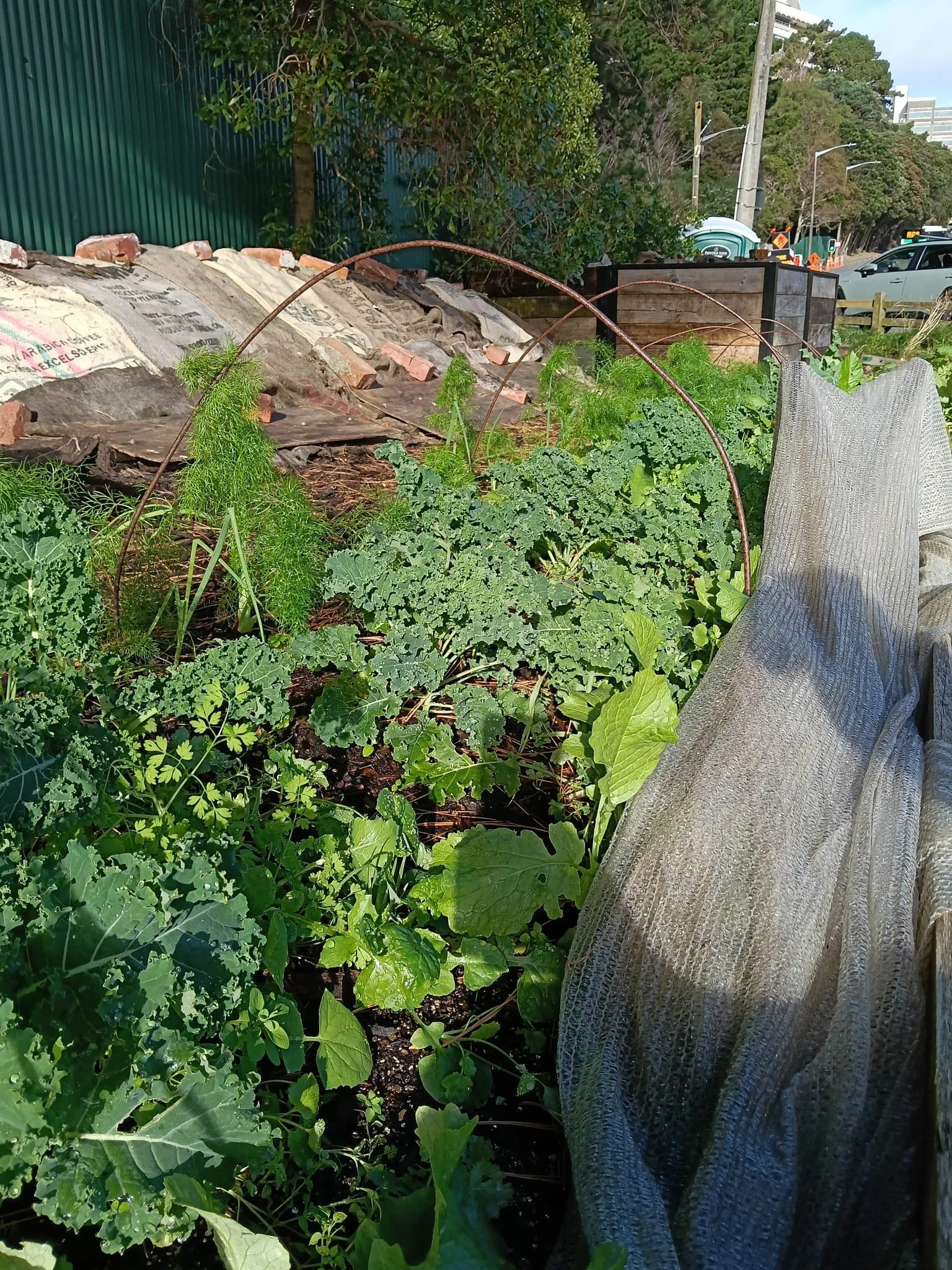
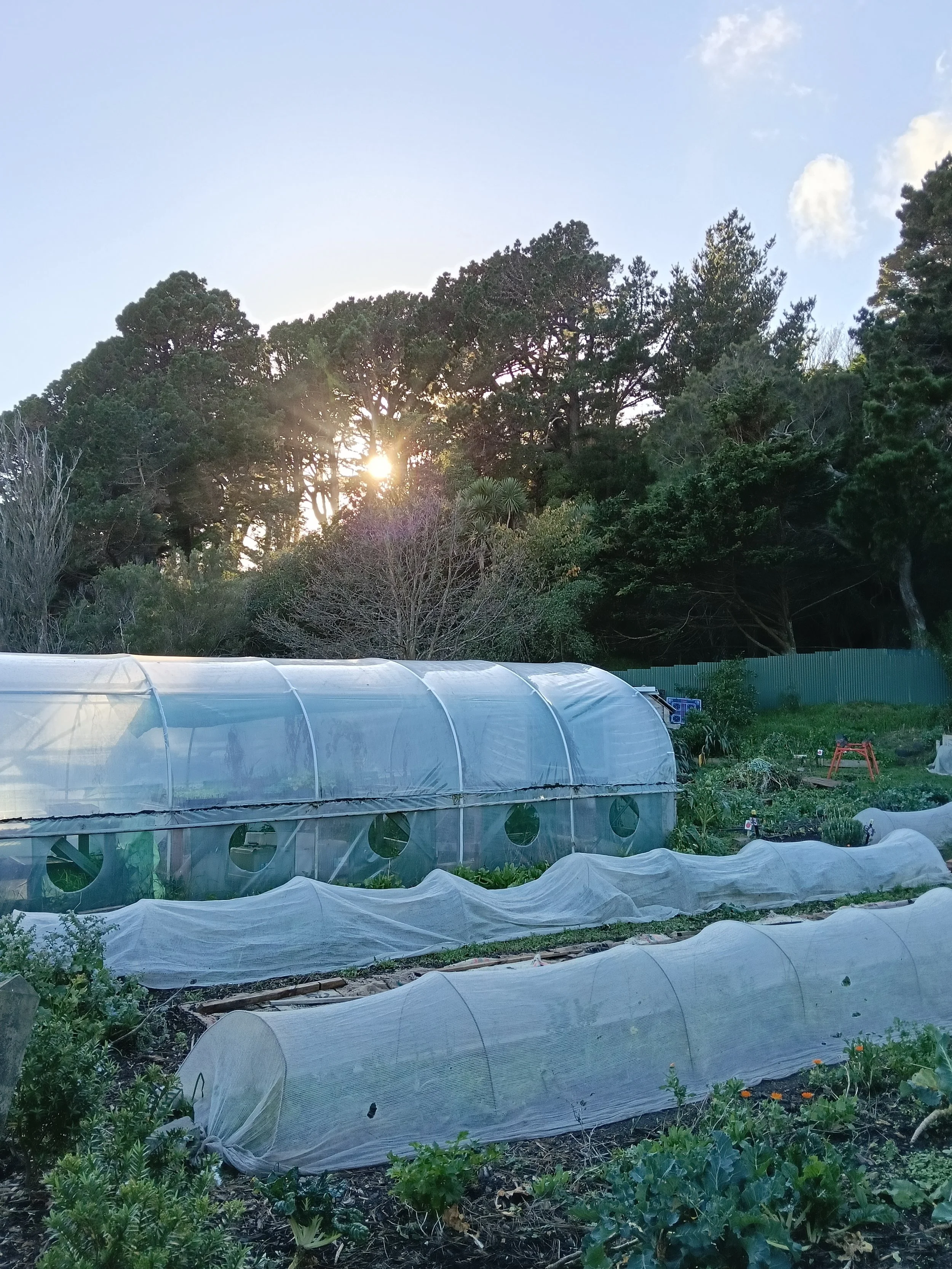
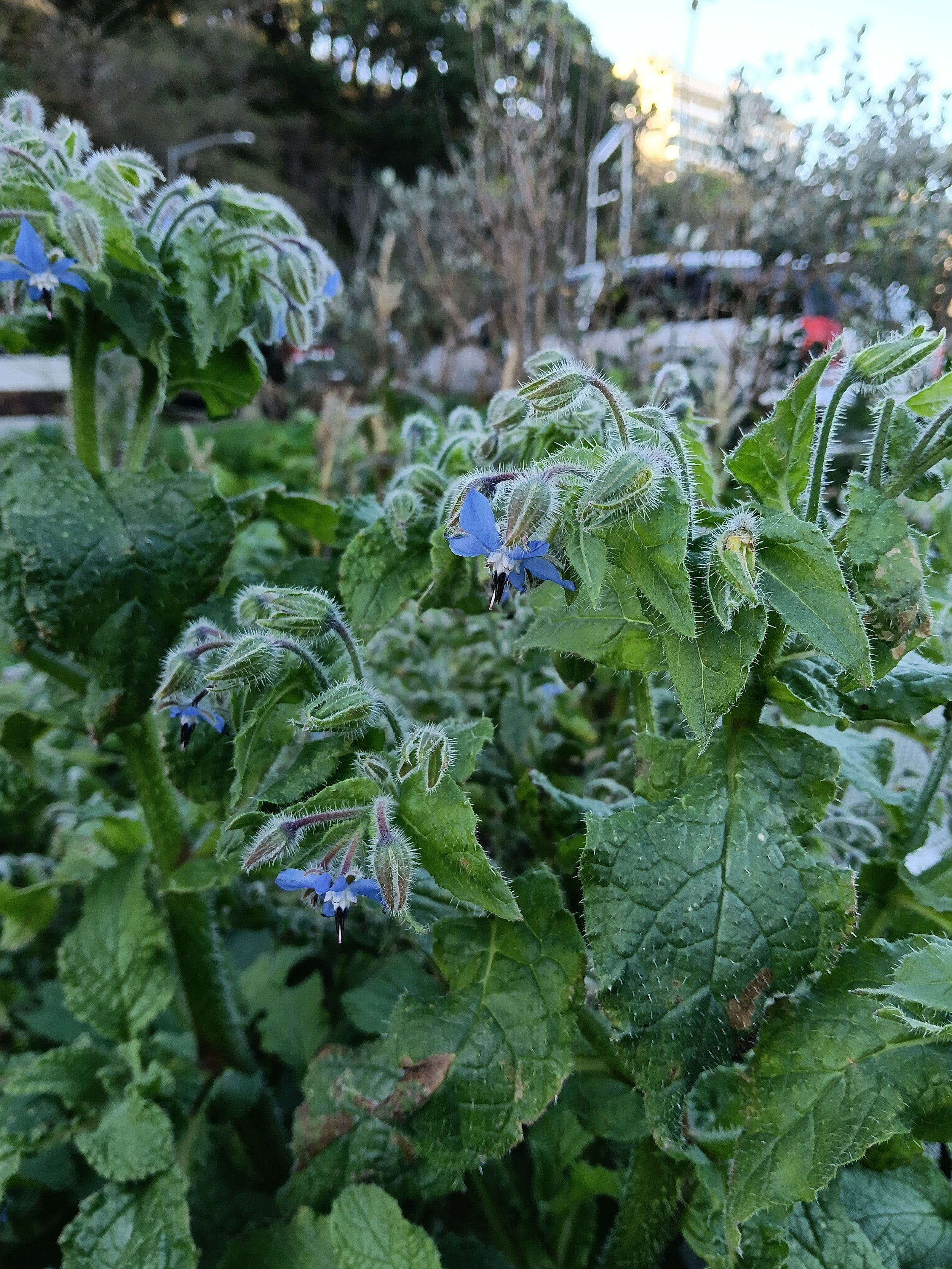
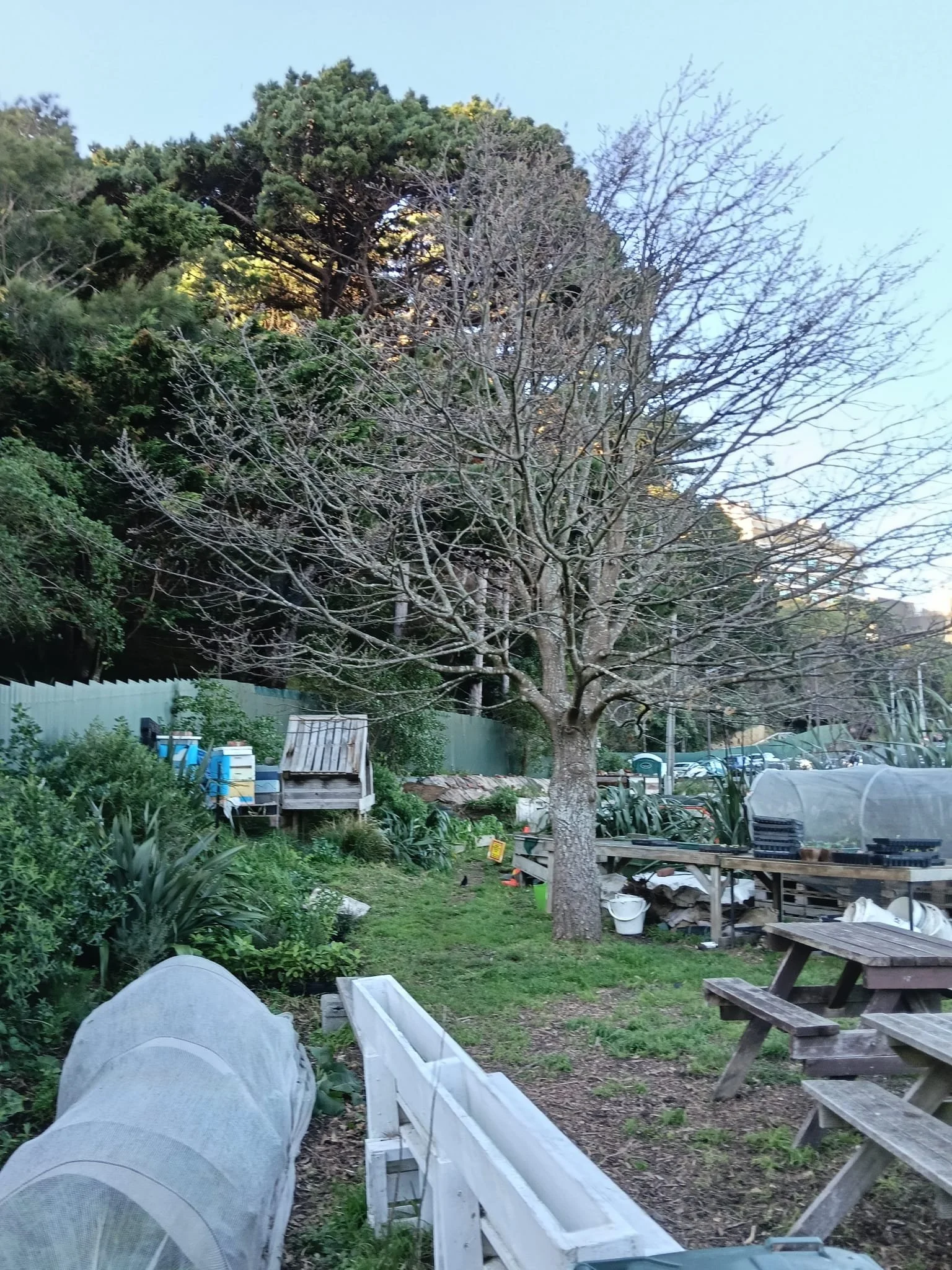
The slower growth that comes with winter has it’s silver linings - it gives us a chance to get on top of our flourishing weeds!
You can really make the most of the variety in weather when it comes to weed management. Our top priority has been to get to our weeds before they start seeding, even if this means quickly chopping off seed heads if you don’t have time to do a thorough weed. As the saying goes ‘one years seeding is 7 years weeding…’ Make the most of the rain, and when the soil is damp get in there with your weed fork or weeding hook to gently lift out weed roots without breaking them - they come out so much more easily when the soil is damp and it’s very satisfying to chase down a long grass root from stem to tip. The best time to do this is in between planting so you don’t disturb the roots of your veggies.
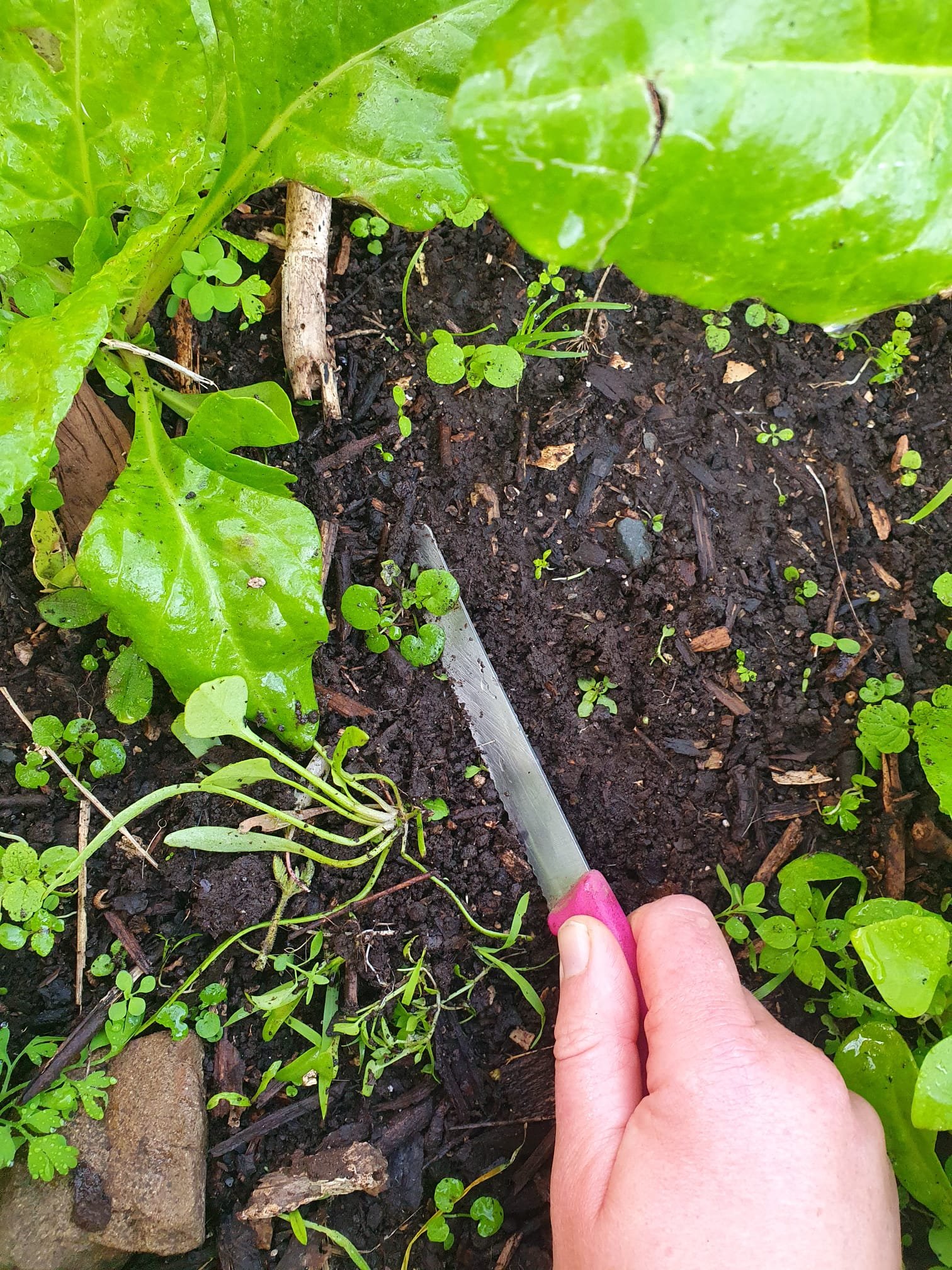
After that, chop and drop weeds (chop at the root and drop around the plants as ground cover) while your veggie plants are growing and get in there with another thorough weed once the veggies have done their dash. Dry sunny days are great for hoeing around your new seedlings. It’s good to catch the baby weeds as they first come up - often about two weeks after you’ve last weeded. Use a hoe (or a knife) to scrape the baby weeds up before they can become established. If you do this on a sunny day the sun will dry out the roots of the weeds you’ve hoed up and they will be less likely to re-root and start growing again.
The best thing you can do is get to know your weeds so you can tailor your management practices. We think of our weeds at the farm in three categories.
1) innocuous - Shallow rooted, easy to remove, don’t re-grow easily. These weeds become a concern when they start seeding, grow so big they overwhelm our plants, or crowd out our wee seedlings. Sometimes these weeds can even provide good ground cover, or can be foraged and eaten so we tend to look at them kindly e.g. chickweed, plantain, milkweed. Chop and drop techniques work well on these guys.
2) Annoying - These weeds are far harder to manage as they grow back really easily and require thorough weeding to make sure the whole root is removed (not so good for chop and drop). For us public enemy number 1 is couch grass, closely followed by public enemy number 2 wandering buttercup. We’ve been doing our best not to add these weeds to the static piles we use for composting green-waste on the farm. Instead we’ve been putting them in our main composting system where it gets hot enough to prevent any risk of them starting to grow. If you don’t have a hot compost at home you could try making a weed-tea, drying them out in the sun, or processing them in a separate area from your other weeds.
3) Noxious - These are the weeds that are really hard to love. For us that’s convolvulus and tradescantia - Fortunately confined to the edges of our farm. These weeds needs incredibly careful weeding as they will grow back from a mere fragment. We are very careful to keep these far away from any composting system so as not to inadvertantly introduce them to other parts of the māra. The options here are: send them to landfill (which is sad, but sometimes the only choice), leave them to brew in water until they are fully broken down (~6 months), or keep them in a sealed think black plastic sack or bag where they will not see the light of day for 6 months - a year and then will be broken down enough that they won’t re-grow.
It’s always good to have a good think before weeding - is it the right weather? Am I going to disturb any crops? What kind of weeds have I got and what type of management should I use? Are these weeds actually causing an issue and do I even need to weed them out?
Weeds can play helpful roles in our gardens as well as being a nuisance e.g. chickweed is great ground cover and is tasty and edible, plantain is edible and has properties as rōngoa, dandelion is a dynamic accumulator and pollinator attractant.